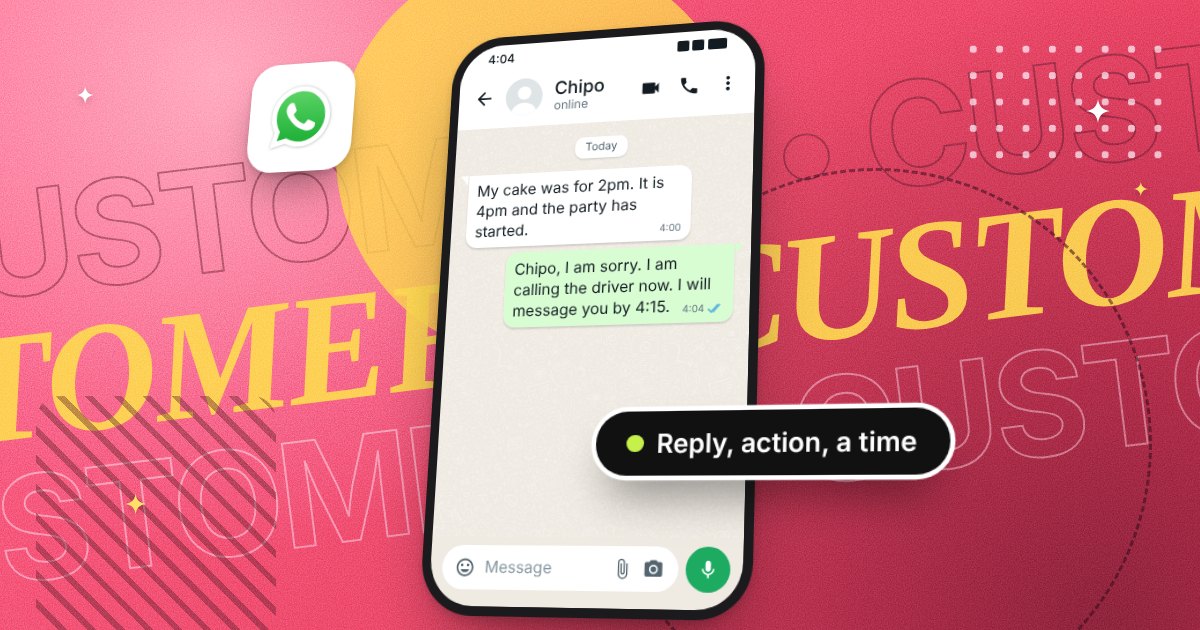
Reply within the hour, repeat the problem in their words, say what you will do and by when. Leave the argument about blame for later.
Reply within the hour. Say back, in one line and in their words, what went wrong. Say what you will do and by when. Leave any argument about who was to blame for later. The first message has one job, which is to stop the damage, not to win.
There are two common ways to get it wrong. One is to answer in two minutes with a defence. The other is to go quiet for a day because you are dreading it. Either leaves the customer angrier than before.
01What does the first message need to do?
An angry customer wants to know three things, even if they never write them down. That you saw the message, that you understand what happened to them, and what happens next.
A message that says "still waiting, here is what I know" at 4:15 is worth more than a perfect one at 5.
Your first reply answers those three and nothing else. It does not explain and it does not quote policy. Explanations come after the customer knows you are dealing with it.
Here is an example. I am inventing this business and this customer, so swap in your own. Say you run a small bakery, and Chipo ordered a birthday cake for her daughter. At 4pm she writes: "My cake was for 2pm. It is 4pm and the party has started."
02The reply most owners send
Here is the one that comes out when you are stressed:
"Hi Chipo, I am sorry for the inconvenience. The driver was delayed because of traffic and it is not something we could control. We always do our best. Your order is on its way."
Read it as Chipo. She hears that it was traffic, that it was not your fault, and that "inconvenience" is the word for her daughter's party. She also learns nothing new, because "on its way" has no time on it. She will write again within minutes, angrier.
03The reply that works
"Chipo, I am sorry. Your cake was meant to be with you at 2pm and it is 4pm. I am calling the driver now and I will message you by 4:15. If it cannot reach you by 4:45, I will bring it myself."
It has three parts, and you can copy them.
- 01Their problem in their words. "Meant to be with you at 2pm and it is 4pm." Use the numbers and the details they gave you. Do not soften them.
- 02One action you are taking now. "I am calling the driver." A fallback with a time, like the 4:45 one above, is fine too. Not "we are looking into it". Name the thing.
- 03A time you will write back. "By 4:15." Then do it, even if the news is not yet good. "Still waiting, here is what I know" at 4:15 keeps the customer with you.
The template, with blanks: "[Name], I am sorry. [What went wrong, in their words.] I am [one action] now and I will message you by [time]."
04Why not explain or blame in the first message?
You do not know yet. In the example, you do not know whether the driver was late, whether the order was written down wrongly, or whether Chipo gave an incomplete address. If your first message names a cause and it turns out to be wrong, you have a second thing to apologise for.
Find out first. Then explain in your second message, briefly, and only if the explanation helps. "The driver went to the wrong road" helps. "Traffic is bad today" does not.
Sometimes the customer made the mistake. Even then, message one is the same: what happened to them, what you will do, when. Settle who was right after the damage is stopped. By then the customer may have cooled down, and a talk about the order form can be a calm one.
If the angry message arrived because nobody answered an earlier one, my post on price enquiries covers replying quickly. If the order itself went wrong, stopping orders falling through the cracks shows a simple sheet. My services page lists what else I help owners with.
05What to do this week
- 01Write the three-part template on a note on your phone, with your own name and your usual kinds of problem.
- 02Decide who replies to complaints when you are on a job or away, and tell them the one-hour rule.
- 03Next time, write down what you promised, in the same place as the order. In the example: "Message by 4:15. Cake by 4:45 or I bring it."
- 04Put a time in your calendar to follow up. After the fix, check in once: "Chipo, I wanted to check the cake was right in the end."
Do the first reply before you do anything else. Then go and fix the problem.
Keep reading
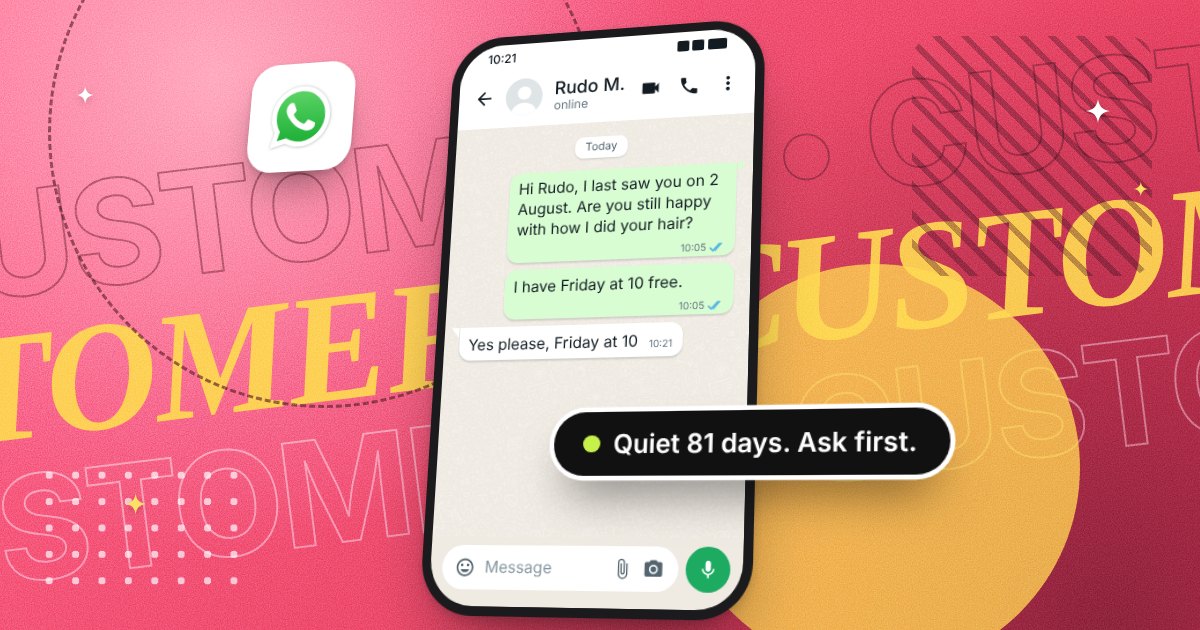
How to Find Customers Who Have Quietly Stopped Coming Back
Sort your customers by last visit, spot the ones quiet for twice their usual gap, and message each one yourself.
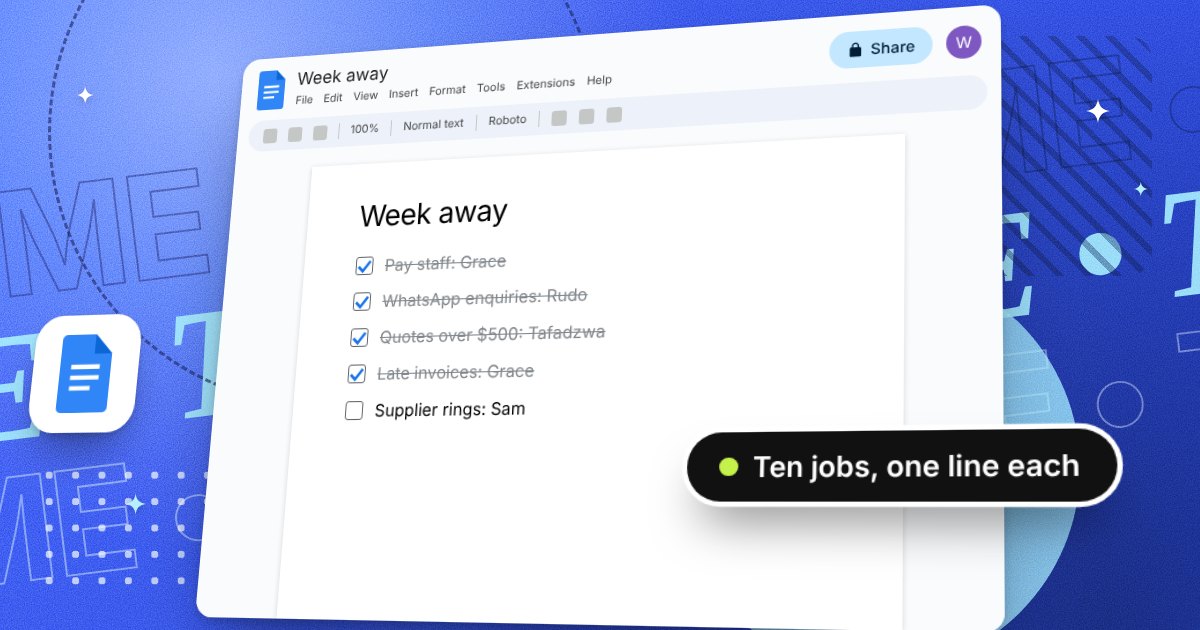
Can I Take a Week Off Without the Business Stalling?
Yes. List the 10 jobs only you do, give each a named person and one line of instructions, and run a two-day trial before you go.
One useful email a week
What is working in real businesses right now, written for owners. No spam, and one click to leave.
We only use your email to send the newsletter. See the privacy policy.
Want this working in your business?
Book a free 15 minute call and we'll tell you where AI can pay off for you. No pitch.
Book a Free Call