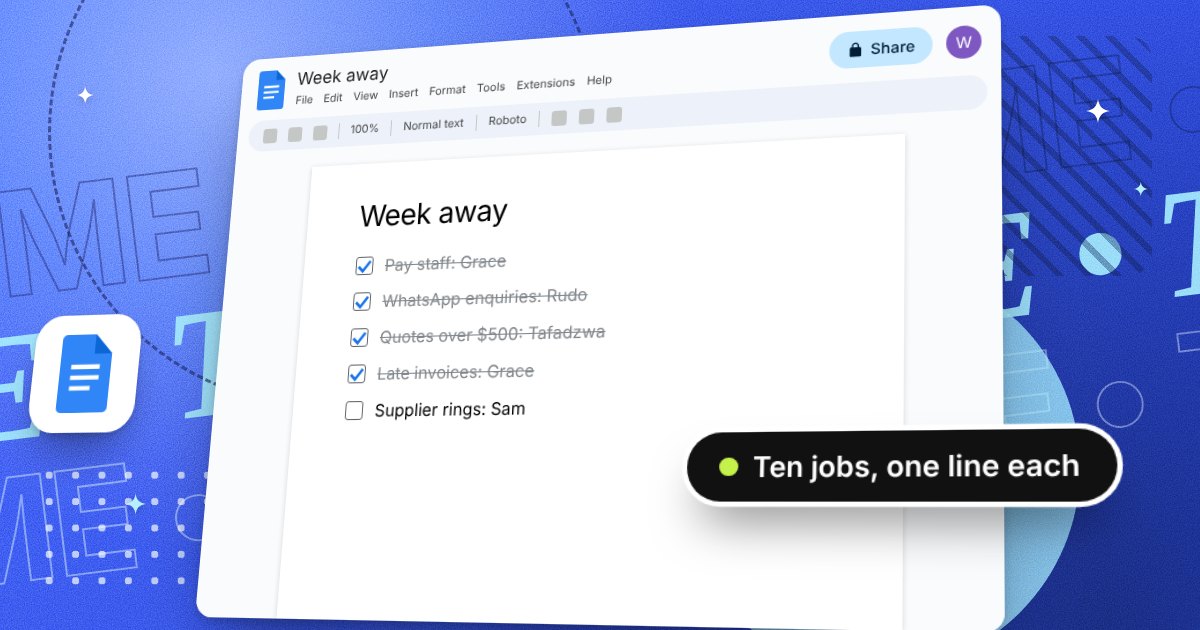
Yes. List the 10 jobs only you do, give each a named person and one line of instructions, and run a two-day trial before you go.
Yes, you can. Write down the 10 jobs that only you do. Give each one a named person and a one-line instruction, drop the ones that can wait, and test the whole plan with a two-day absence before you book the week. The business stalls when a job has no name next to it.
If you have not had a week away in years, the missing piece is usually a list. Everything routes through you because nobody ever wrote down what "everything" is.
01Step 1: List what only you do
For one week, keep a note on your phone. Every time someone needs you, or you do something because nobody else would, write one line. Do not tidy it. At the end of the week you will probably have more lines than you expect, and many will be the same job in different clothes.
Merge them into the 10 that matter. Here is a made-up example. Say you run a garden maintenance company with 12 staff and 4 crews, and this is your list:
- 01Pay staff on Friday
- 02Approve any quote over $500
- 03Answer new enquiries on WhatsApp
- 04Chase late invoices
- 05Order materials from the supplier
- 06Settle the weekly crew schedule
- 07Handle complaints
- 08Check the work at the biggest client
- 09Send the weekly report to your partner
- 10Pick up the phone when the supplier rings your personal number
I am inventing this business, so swap in your own jobs. The shape is what matters. Some of these are real work, and some are habits.
02Step 2: Drop three for the week
Go down the list and ask of each job: what happens if this simply does not get done for 7 days? In the example, three do.
In our example, the weekly report to your partner can skip a week. Ordering materials for next month can wait until you are back, if the crews have enough for this one. Checking the work at the biggest client can also wait, because the crew lead will send photos on Friday and you will look when you are back.
A missed week of these jobs costs less than the hours it takes to cover them.
03Step 3: Give the other jobs a name and a line
Every remaining job needs two things: a person, and one sentence they can follow without calling you. Not a manual. One sentence.
In the example:
- Pay staff on Friday: Grace sends the payroll sheet to the bank by 2pm. If a number looks wrong, Grace checks it with you on the agreed call.
- Approve any quote over $500: Tafadzwa may approve up to $800 if the margin is at least 30%. Above that, tell the customer you will reply on Monday.
- WhatsApp enquiries: Rudo replies within the hour with the standard price message and books the first free visit slot.
- Chase late invoices: Grace sends the second reminder to anyone over 14 days late. Nothing harsher until you are back.
- Settle the crew schedule: Sam builds Monday's schedule from the standing list, and changes nothing mid-week unless a crew is off sick.
- Handle complaints: Tafadzwa replies the same day, says what will be done and by when, and offers one free return visit. Nothing else without you.
- Supplier rings your personal number: Sam gives the supplier their own number today, before you leave.
Notice what most of the lines do. They set a limit, such as an amount or a time, that a person may act on alone. A limit lets someone decide without calling you. Without one, they will wait for you, or they will guess.
A person who has a limit can decide. A person without one can only wait for you.
If the hours-only-you-can-do idea is new to you, my post on what an hour of your time is worth shows how to sort the two piles.
04Step 4: Allow one phone call
You will want to check in. Decide how, before you go, so that it does not turn into 30 messages a day.
Pick one call, at one time, for ten minutes. In the example it is Wednesday at 5pm, after the crews are in. Grace has one question list for it. If something cannot wait for Wednesday, the rule is that it is either money leaving the bank or a customer in real trouble. Everything else goes on the list.
Tell the team this plan out loud. It is easier for them to leave you alone when they know when you will answer.
05Step 5: Run a two-day trial first
Do not test this on your holiday. Take two working days off first, ideally a Thursday and Friday, with the phone on silent apart from the one agreed call.
When you are back, do not ask how it went. Look at the list. For each job, did it happen? Where someone stopped and waited, the line was missing a limit. Where someone guessed wrong, the line was unclear. Fix those two or three lines. Then book the week.
Expect some gaps. That is the reason for the trial.
06What this does not fix
A list does not replace trust. If a person on your team cannot be trusted with a $500 decision, that is a different problem and a week away will not solve it. Better to find that out on a Thursday than from the beach.
It also does not remove the jobs only you can do, like pricing the largest contract of the year. If you would rather go through your own list with someone, my services page is the place to start. Those you either do before you leave or leave until you are back. A few can be written down in more detail, but not all.
07What to do this week
- 01Keep a note on your phone for 5 days of every time someone needs you.
- 02On Friday, merge the notes into 10 jobs.
- 03Mark three that can skip a week.
- 04For the rest, write a name and one line with a limit. Show it to each person and ask: is this clear?
- 05Pick a Thursday and Friday in the next month for your two-day trial, and agree your one call.
Start with the note on your phone today, because the list takes a week to collect.
Keep reading
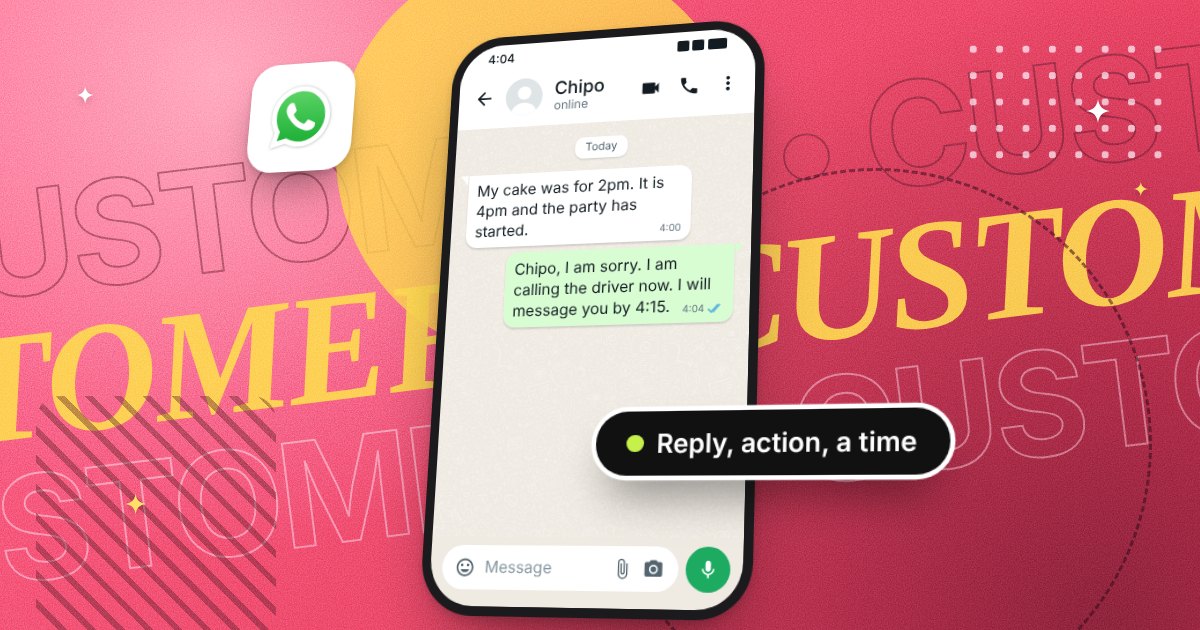
A Customer Is Angry on WhatsApp. What Do I Say First?
Reply within the hour, repeat the problem in their words, say what you will do and by when. Leave the argument about blame for later.
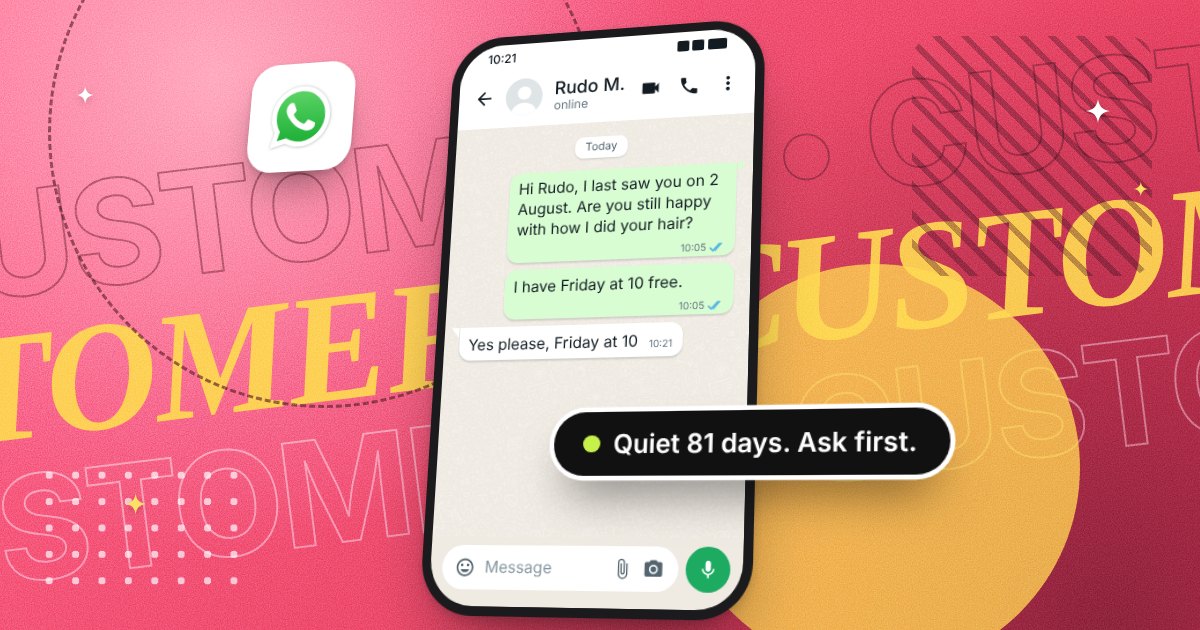
How to Find Customers Who Have Quietly Stopped Coming Back
Sort your customers by last visit, spot the ones quiet for twice their usual gap, and message each one yourself.
One useful email a week
What is working in real businesses right now, written for owners. No spam, and one click to leave.
We only use your email to send the newsletter. See the privacy policy.
Want this working in your business?
Book a free 15 minute call and we'll tell you where AI can pay off for you. No pitch.
Book a Free Call